
Jealousy, Chess, and Chance: One Autistic Understanding of Jealousy
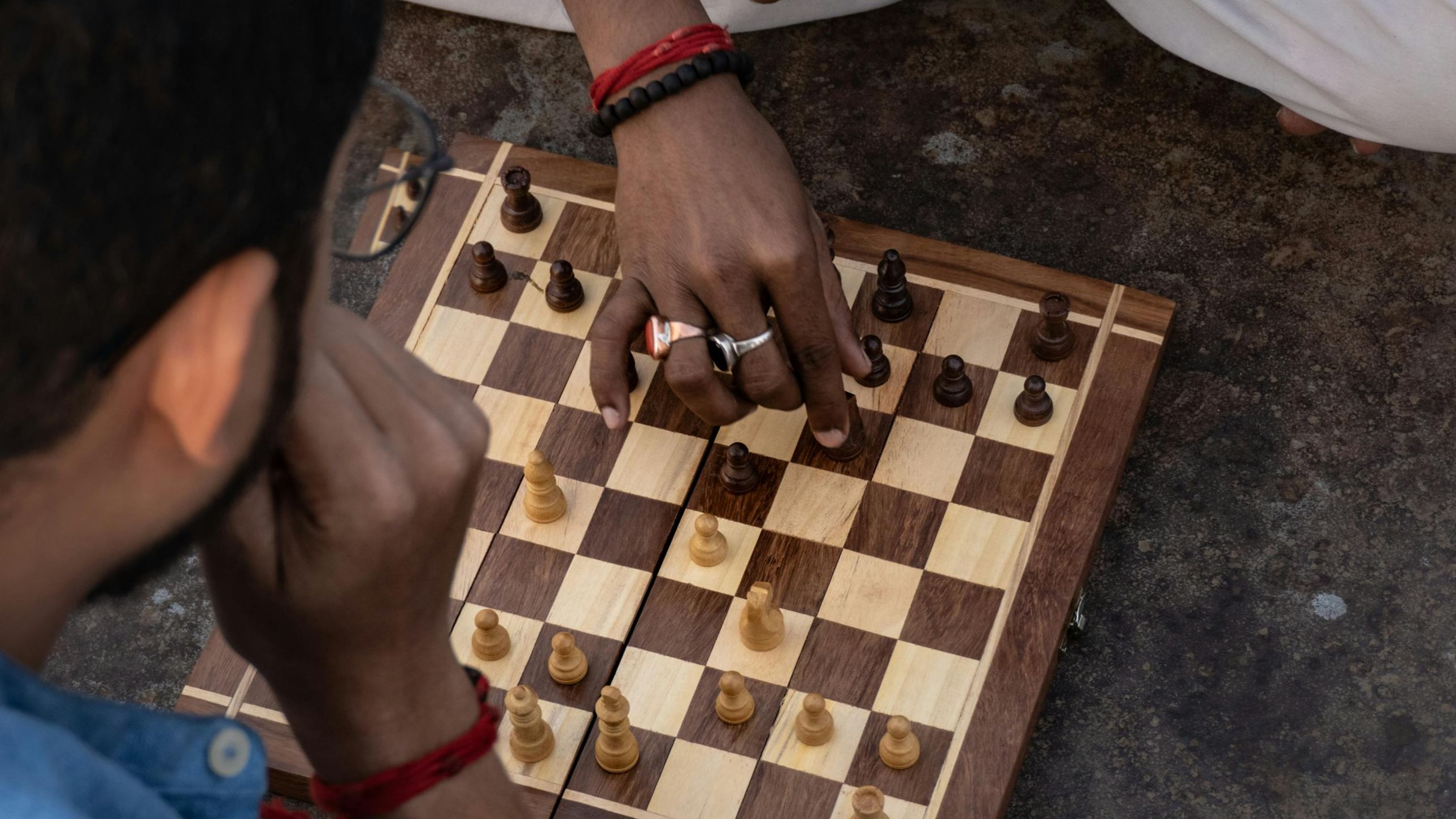
Jealousy often gets a really bad press, in monogamous and non-monogamous relationships. We are taught to view it as a shameful, irrational reaction, or as a sign of insecurity in ourselves or a lack in our relationship(s). But in my work, I am starting to see a pattern in how some autistic people experience jealousy, which doesn't fit even our most affirming models and understandings of jealousy. Quintessentially, it all comes down to: "Do you play chess?"
What is Jealousy?
First, let's start by agreeing that jealousy is a sensory and emotional signal. It is an internal alarm system that alerts us to a perceived threat to something we value in our relationship. Whether that’s our connection, our sense of safety, or our place in a partner's life. It's not inherently 'wrong'; it is simply information that requires decoding.
The 'Me, We, Society' Model of Jealousy
To navigate this, I often point clients toward Jessica Fern’s 'Me, We, Society' framework from Polysecure. This model helps us break down the sources of our jealousy:
Me: This is about your own internal landscape, such as your attachment history, your personal insecurities, and your past traumas.
We: This focuses on the dynamic between you and your partner(s), which may include the agreements, the level of trust, ongoing consent, and how you communicate your needs.
Society: This addresses the external world. This includes the mono-normative scripts, the expectations around what a "proper" relationship should look like, and the pressure to conform.
By untangling these three layers, we can stop seeing jealousy as a monolithic monster and start understanding it as a manageable set of factors. However, as an autistic therapist, I’ve found that for many neurodivergent people, this model, while brilliant and extremely helpful to many, is missing a crucial fourth layer for some autistic people: predictability.
The Autistic Variable: Predictability and 'Closed Systems'
In my clinical experience, neurodivergent people are often remarkably generous with their love. Many autistic folks possess a natural, expansive capacity for true compersion (the empathetic joy we feel when seeing our partners experience happiness with others). We are often less constrained by societal "norms" of how love should look, which can create a beautiful, expansive foundation for ENM.
However, a specific subset of the autistic community also struggles intensely with jealousy, and their experience doesn't always map onto the 'Me, We, Society' model.
I have noticed a distinct pattern among autistic people who are drawn to 'closed-system' logic games, such as chess. In these systems, every action has a consequence, the rules are absolute, and there are a finite, learnable number of outcomes. There is no element of chance; if you make the right move, you get the expected outcome.
For these individuals, a relationship can feel like a high-stakes, closed-system game. When a partner introduces an unpredictable variable, like a new dynamic or an unscripted social interaction, it isn't just an emotional trigger; it is a system-shattering event. The jealousy that follows isn't necessarily about insecurity or societal pressure. It is a physiological and psychological reaction to unpredictability.
The distress is rooted in the loss of a predictable pattern. It is the anxiety of being in a game where the rules have suddenly been rewritten without your consent. It can lead to a profound sense of confusion, and often inner shame and a sense of failure for the autistic person. For the partner(s), it can be bewildering, as relationships clearly aren't closed systems, so why is Life being its unpredictable self so dangerous or problematic?
Different Neurotypes, Different Needs
It is vital to distinguish this from the experiences of other neurodivergent people. For those who also have ADHD, or for autistic individuals who prefer 'open-system' games involving chance and spontaneity, the 'Me, We, Society' model often fits a lot more comfortably. Their experience of jealousy is more fluid, often responding well to the usual therapeutic interventions around communication enhancement and attachment security.
But, I would argue, for the 'Chess-Minded' autistic, the intervention must be different. We don't need to be told we are "too controlling" or "insecure." We need to acknowledge that our nervous systems are designed for high-fidelity pattern recognition and are often soothed by repetitive predictability, such as stimming.
If you are an autistic person who struggles with jealousy, I invite you to ask yourself: "Is this about my partner, or is this about a break in my pattern?" If it is a break in your pattern, you are not failing at relationships. You are simply a systems-thinker in an unpredictable, unscripted world. The work, then, isn't just about 'healing'—it’s about finding ways to build predictability, establish clear 'new' rules, and honour your need for a relationship that feels like a coherent, reliable system.
In summary, jealousy for autistic individuals isn't always about insecurity. For many 'chess-minded' thinkers, it’s a physiological reaction to the unpredictability of 'open-system' intimate relationships. By reframing this as a pattern break, we can help reduce the shame and panic around this type of jealousy.
If you'd like a neuro-affirming space to explore some of these ideas and experiences, why not get in touch? And if you’re looking to explore these concepts with others who think in patterns and systems, you are welcome to join us in The Glitch-Free Intimacy Guild. The Guild is a community space created specifically for neurodivergent adults to navigate the complexities of connection, sex, and intimacy together, and we'd love you to come and join us!
Tiga-Rose Nercessian (she/her), PhD Sex & Relationship Psychotherapist (UKCP, NCPS, COSRT Accredited) | Founder of Intimata | Specialising in Relationship Intelligence & Enhancement and Neurodivergent Intimacy.